


How to Clean a Bathroom: Step-by-Step Guide for A Fast, Professional Clean
This article was first published on: January 16, 2026
Last updated:
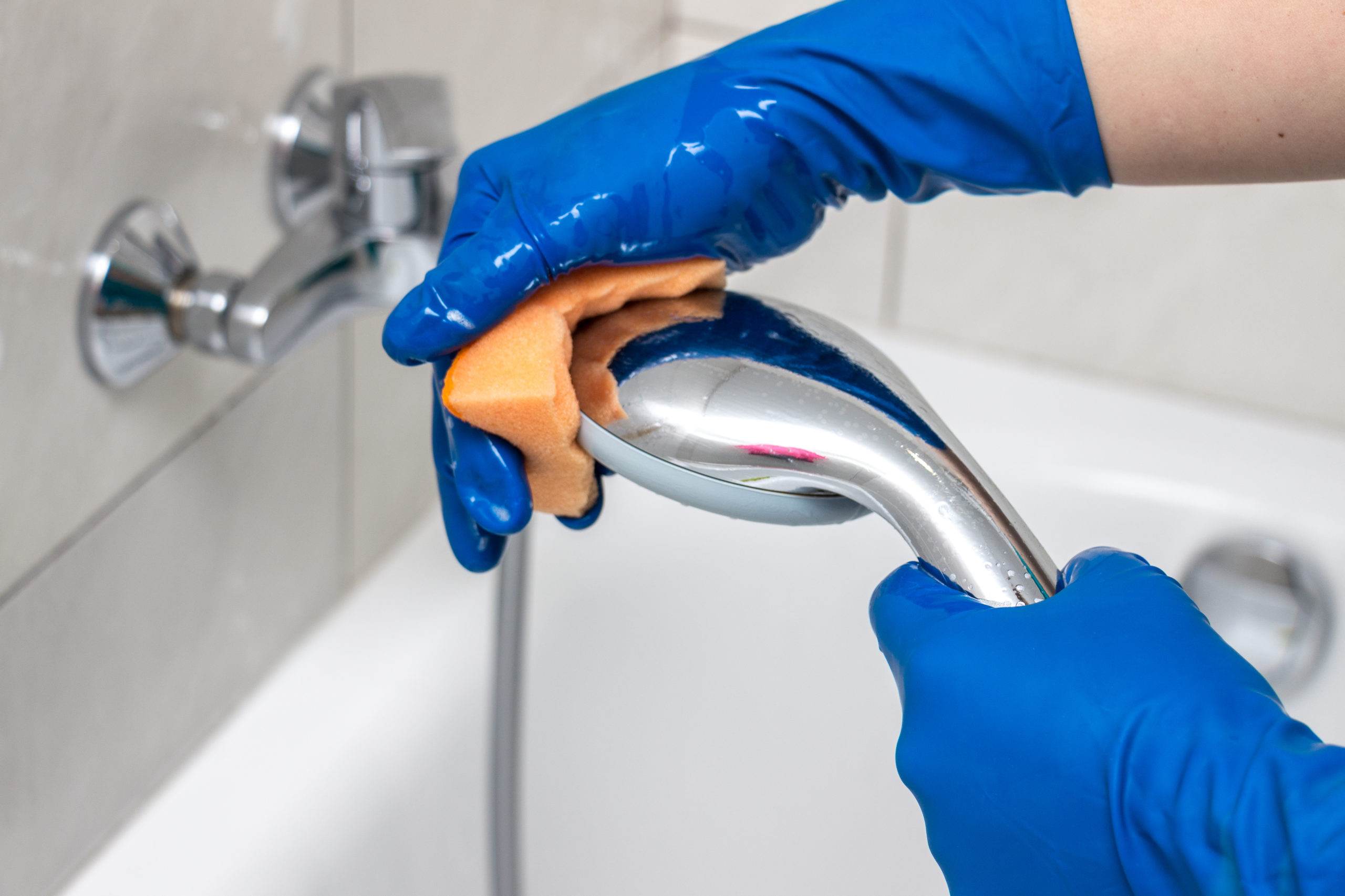
Bathroom surfaces can hold millions of bacteria. Sinks and taps are often more contaminated than the toilet if they aren’t cleaned well. Shower curtains can also be among the most germ-covered spots in your bathroom.
Keeping your bathroom clean often feels like a never-ending job, especially if you have young children, health needs, or mobility challenges.
This step-by-step guide shows you how to clean a bathroom efficiently. It covers essential bathroom cleaning supplies, a simple bathroom cleaning checklist, deep clean bathroom tasks, time-saving hacks, and accessibility-friendly tips.
How to clean a bathroom: Begin by decluttering, opening windows, and switching on the extractor fan. Apply cleaning products to the toilet, shower, bath, and sink, so they can work while you dust and wipe higher surfaces. Scrub and rinse the shower or tub, clean the toilet bowl and exterior, wash the sink and countertops, then vacuum and mop the floor with disinfectant. Make sure disinfectant products stay on surfaces for at least 10 minutes before rinsing them away.
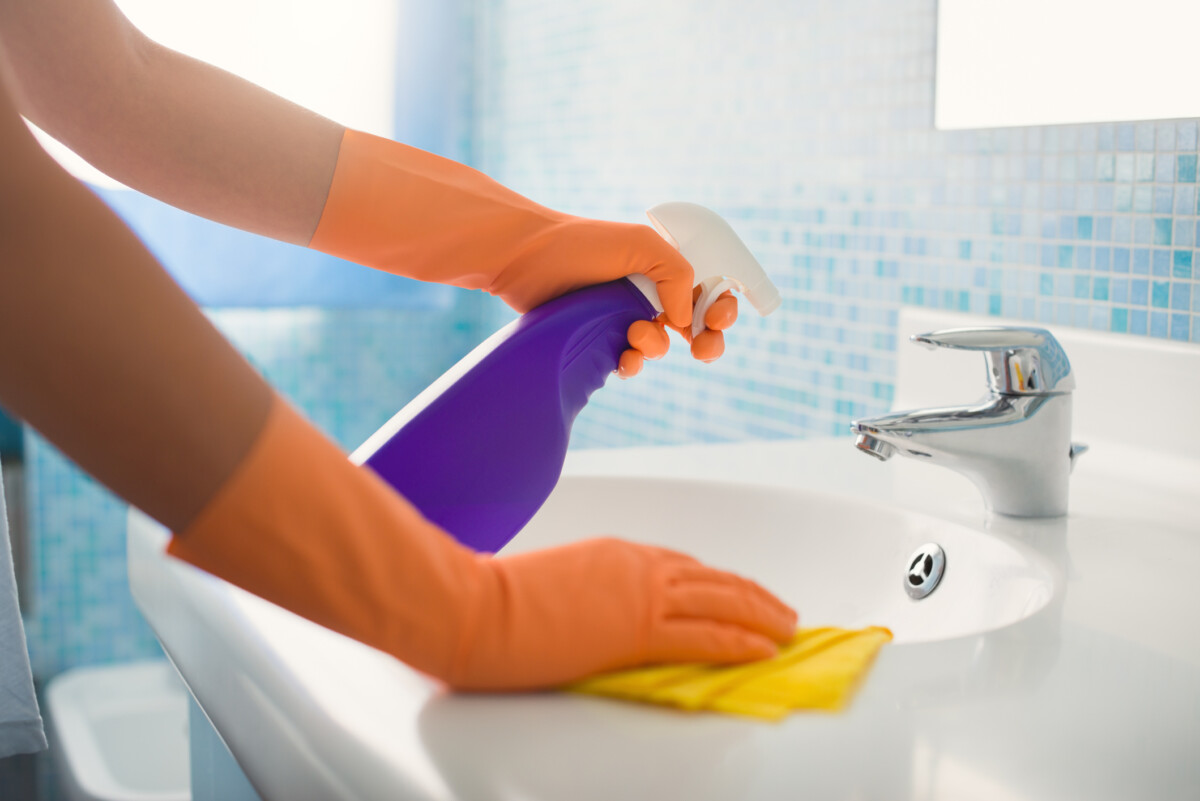
Essential Bathroom Cleaning Supplies
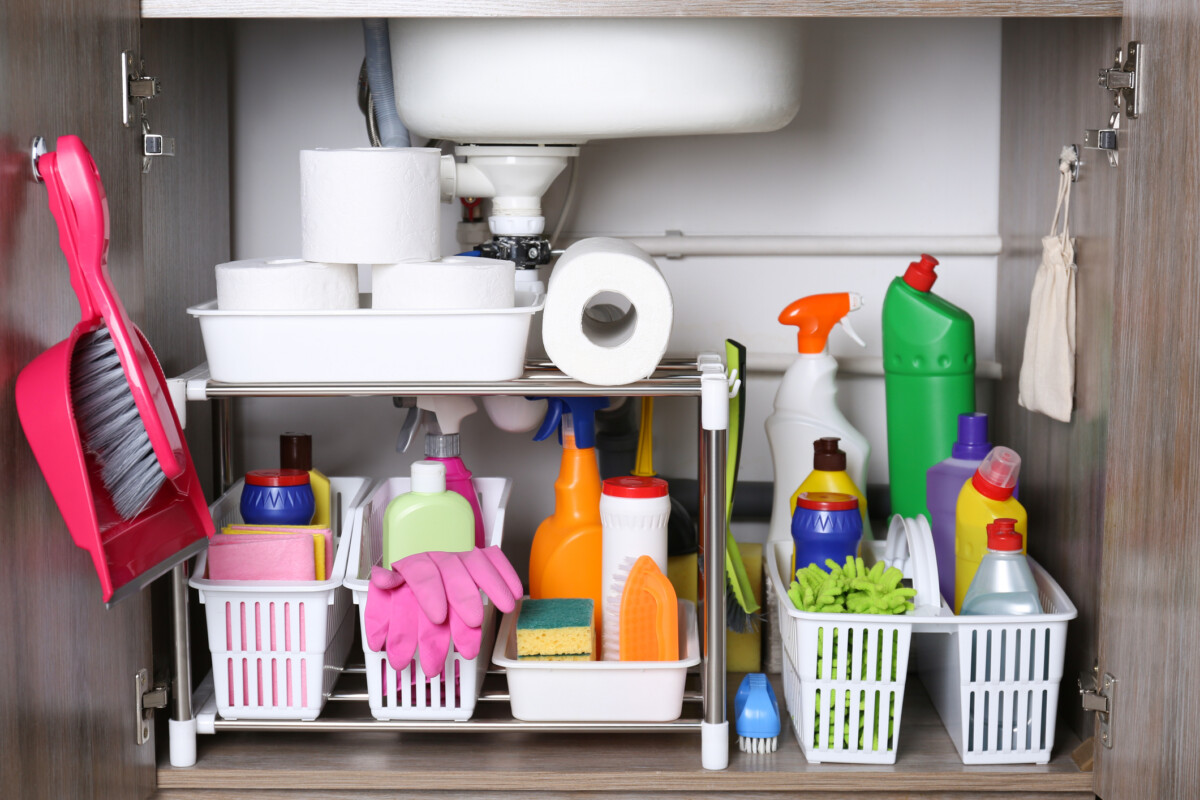
Whatever your bathroom design, having the right bathroom cleaning supplies ready makes it easier to disinfect bathroom fast when needed.
Must-Have Cleaning Products
- All-purpose cleaner for countertops, doors, and ceramic tiles.
- Limescale remover for hard water stains
- Disinfectant or antibacterial spray for high-touch areas like handles, flush buttons, and grab rails.
- Glass cleaner for shower screen, mirrors, and chrome fittings.
- Bleach or toilet cleaner gel to clean toilet bowl interiors and kill germs in the U-bend.
- Mould remover for black spots on sealant, grout lines, or ceilings.
- Grout cleaner or a homemade bicarbonate of soda paste for stained grout lines.
Tools and Equipment
- Microfibre cloths for wiping, buffing, and polishing.
- Scrub brushes and non-scratch pads for tiles, grout, and textured shower trays.
- Toilet brush, including a holder that can be disinfected easily.
- Rubber gloves to protect your hands from hot water and cleaning products.
- Bucket, spray bottles, mop, squeegee.
Long-handled brushes and lightweight tools help reduce bending and make cleaning safer, especially near walk-in baths and walk-in showers.
How Long Does It Take to Clean a Bathroom?
Quick Daily Clean (5 to 10 minutes) Wipe key surfaces, freshen the toilet, and clear away clutter.
Weekly Clean (20 to 30 minutes) Clean the toilet, basin, shower or bath, and floors.
Deep Clean (45 to 60 minutes) Tackle the grout, limescale, extractor fans, and areas behind fixtures.
Step-by-Step Bathroom Cleaning Checklist
Step 1: Prepare the Bathroom
- Remove toiletries, mats, and towels from surfaces
- Open the windows and/or switch on the extractor fan to improve ventilation
- Put all of your bathroom cleaning supplies within easy reach.
Check that the floor is free of trip hazards before you start. Keep walk-in baths and walk-in showers dry until you’re ready to clean them.
Step 2: Apply Cleaning Products
- Spray the shower walls, bathtub, and tiles with your chosen bathroom cleaning product, then let it sit for 5 to 10 minutes.
- Apply toilet bowl cleaner or bleach around the rim and in the bowl, then allow it to sit for at least 10 minutes.
- Spray the sink basin and surrounding countertops with all-purpose bathroom cleaner.
Letting products sit is one of the most effective bathroom cleaning hacks. It gives them time to dissolve grime and makes scrubbing easier.
Step 3: Clean From Top to Bottom
- Dust or wipe light fixtures, extractor fans, and high shelves.
- Clean shower glass and mirrors with glass cleaner. Dry them with a microfibre cloth for a streak-free finish.
- Wipe the walls or splashbacks, especially around sinks and near the toilet.
Cleaning from top to bottom prevents dirty water and dust from landing on areas you have already cleaned.
Step 4: Clean the Shower and Tub
- Scrub the shower walls, bathtub, and fixtures using a non-scratch pad or brush. Remember to get right into the corners and around the taps.
- Apply a limescale remover or glass cleaner on the shower glass, then use a squeegee to buff it dry.
- Rinse all surfaces thoroughly with warm water.
Step 5: Clean the Toilet
- Scrub the toilet bowl with a toilet brush, making sure you get right under the rim and into the U-bend.
- Spray the toilet seat, lid, flush handle or button, and exterior surfaces with disinfectant and wipe clean.
- Remember to spray and wipe the base of the toilet and the floor behind it.
Step 6: Clean the Sink and Counter
- Scrub the sink basin, including around the plug and overflow.
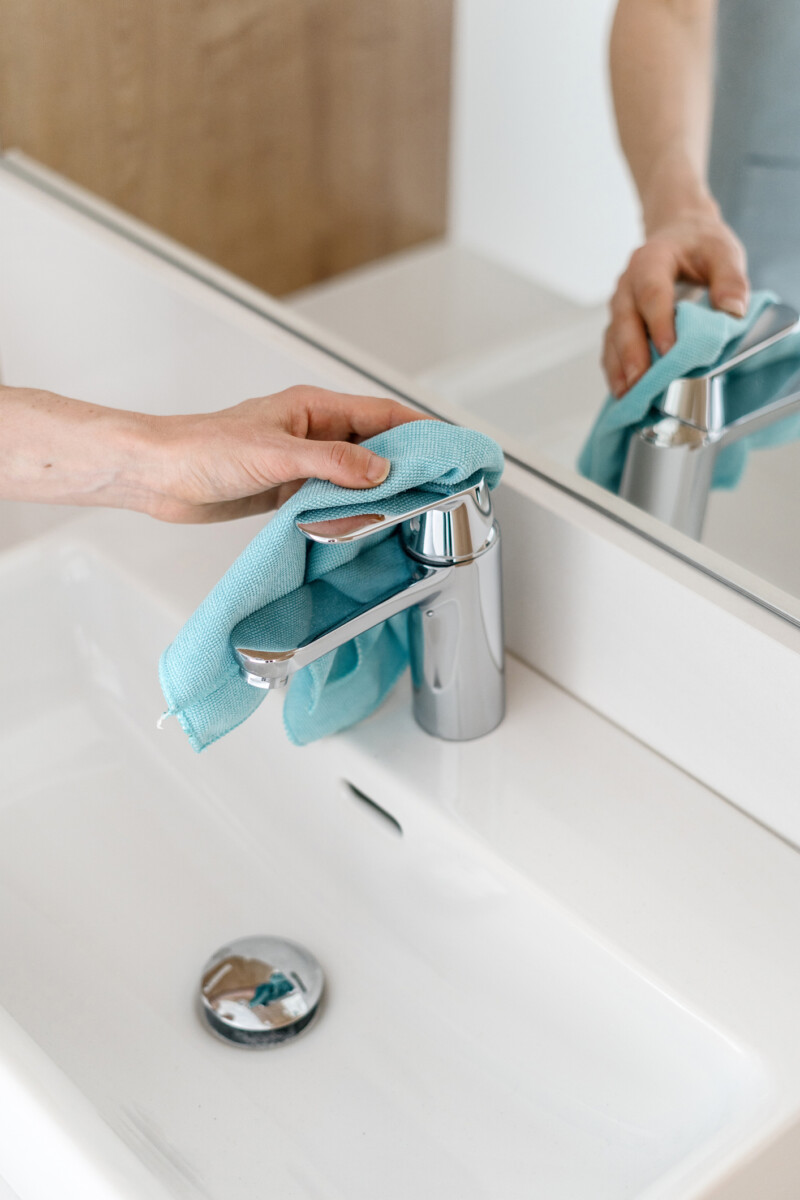
- Clean the taps and handles, buffing them dry to prevent water spots and fingerprints.
- Wipe the countertops, cupboard doors, and grab rails.
Step 7: Clean the Floor
- Sweep or vacuum to remove hair and dust, working into the corners and around the toilet base.
- Mop the floor, wringing the mop well to avoid pools of water on non-slip or textured floors.
- Focus on edges, corners, and skirting boards, as dirt often collects there.
- Make sure the floors are fully dry before anyone with limited mobility walks on them.
Deep Cleaning Tasks (Monthly)
These jobs only need to be done occasionally, but they make a big difference to bathroom hygiene.
Cleaning Tile Grout
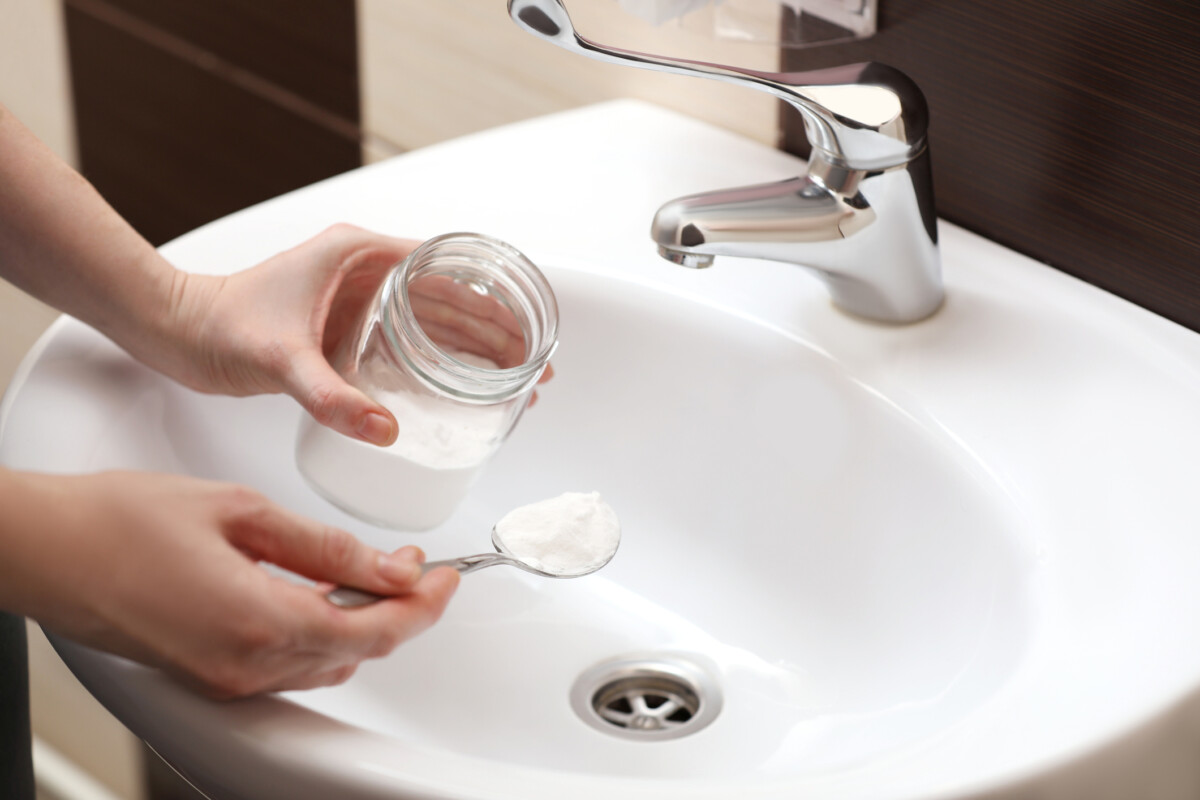
- Apply a grout cleaner or a homemade paste made with bicarbonate of soda to the grout using a small brush.
- Let it sit for five to 10 minutes, then scrub and rinse.
- Do not use harsh abrasives on delicate tiles like marble or limestone.
Removing Soap Scum
- For stubborn soap scum on tiles, baths or shower screens, leave a specific soap-scum or limescale remover to work before scrubbing.
- Wipe shower walls and glass with a squeegee after each shower to help prevent soap scum from building up.
Dealing with Mould and Mildew
- Treat small areas of mould or mildew with a mould and mildew remover. Follow the instructions on the label and remember to open a window before you start.
- If mould keeps coming back, it may mean you have ventilation or damp problems that need professional help.
Cleaning Extractor Fan
- Switch off the power to the extractor fan, then use a vacuum hose to remove dust from the grille.
- Wipe the cover with a damp cloth and mild bathroom cleaner, then ensure it’s fully dry before turning the fan back on.
Quick Bathroom Cleaning Hacks
If you’re in a rush, these smart bathroom cleaning hacks will help you clean bathroom fast without compromising hygiene.
- 5-minute daily routine: Wipe the sink and taps, scrub the toilet with the toilet brush and flush it, hang up the towels, and wipe the floor near the toilet and sink.
- Use a safe all-purpose cleaner on bathroom surfaces to avoid switching products and speed up your bathroom cleaning routine.
- Use a squeegee after showers, keep the toilet lid closed when flushing, and run the extractor fan for at least 15 minutes after bathing or showering to reduce condensation and smells.
How Often Should You Clean Your Bathroom?
Daily (5-10 minutes): Wipe the sink, quickly clean the toilet bowl, hang up towels, and ventilate the room.
Weekly (20-30 minutes): Thoroughly clean the toilet, sink, shower or bath, mirrors, and floors.
Monthly (45-60 minutes): Clean the grout lines, extractor fan, behind the toilet, and descale the shower head.
Quarterly: Declutter bathroom cabinets, remove unused toiletries, wash shower curtains, and check sealant and grout lines.
If you have mobility challenges, consider spreading weekly bathroom cleaning tasks over several days or asking family or professional cleaners for help.
Common Bathroom Cleaning Mistakes to Avoid
- Using acidic or abrasive cleaners on natural stone, enamel, acrylic, or specialist non-slip trays.
- Not allowing dwell time. Disinfectants need several minutes to sit on surfaces to effectively kill germs, so don’t wipe them off straight away.
- Cross-contamination. Never use toilet cloths or brushes on other fixtures, and change or wash cloths regularly.
- Forgetting hidden areas, such as under toilet rims, behind the toilet, extractor fan covers, and around the taps.
FAQs
Q: What is the most hygienic way to clean a bathroom?
A: The most hygienic approach to cleaning a bathroom is to work from top to bottom using appropriate cleaning products, allow disinfectants sufficient dwell time on high-touch areas, and use separate cloths for the toilet and other surfaces to avoid cross-contamination.
Q: Can I use vinegar to clean my entire bathroom?
A: Vinegar can help dissolve limescale and soap scum on some surfaces. However, it’s not suitable for natural stone, and you will still need to use a disinfectant to kill bathroom germs.
Q: How do I get rid of mould in my bathroom?
A: Treat small mould patches with a specialist mould remover, leave it to work for the recommended time, then rinse and dry. To stop it returning, you will need to improve ventilation, fix leaks, and seek professional help for persistent mould problems.
Q: What’s the fastest way to clean a bathroom for guests?
A: Focus on visible and high-use areas. Wipe the sink and taps, clean the toilet bowl and seat, clean the shower glass or draw the curtain, empty the bin, replace towels, and vacuum the floor before giving it a quick mop.
Q: How often should I replace my toilet brush?
A: Experts suggest replacing toilet brushes every six to 12 months, or sooner if the bristles are worn. You should regularly disinfect the brush and holder between uses.
Q: How do I clean a bathroom extractor fan?
A: Turn off the power, remove or open the cover if possible, vacuum dust from the grille and fan, then wipe with a damp cloth and mild cleaner. Wait until it’s dry before restoring the power.