


Assisted Bathing Guide 2026: Options, Aids and How to Choose
This article was first published on: January 18, 2026 by Premier Care Editorial Team
Last updated: July 21, 2026
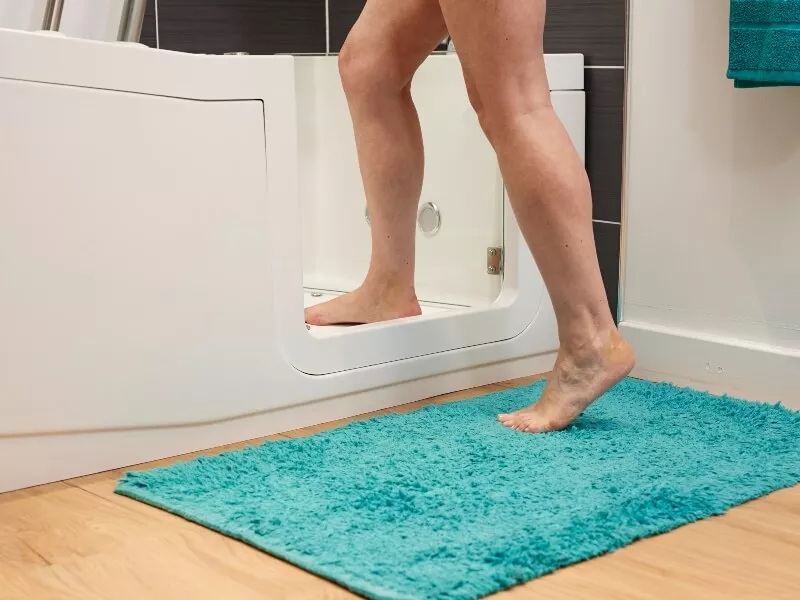
Assisted bathing means using specialist baths, showers or aids to make washing safer and more comfortable for someone with limited mobility. It helps people keep their independence and dignity in the bathroom, whether that is because of age, a disability, or recovery from an injury.
As we get older, climbing in and out of a standard bath or standing for a shower can become harder and less safe. Fortunately, there are solutions that can make bathing easier, safer and more comfortable. The right setup can make washing easier, lower the risk of a fall, and let you or a loved one carry on bathing with confidence.
This guide explains the main options, the aids that support them, what they tend to cost, and the funding that may be available to help pay for them.
Get a FREE Brochure
Fill out the form in seconds and discover our full range of assisted bathing showers and baths.

Comparing your main options at a glance
| Option | Best for | Main benefits | Things to weigh up |
| Walk-in shower | Quick, frequent washes; people who can stand or use a seat | Easy to clean, low maintenance, step-free entry | No option to soak |
| Walk-in bath | People who want to soak but struggle to step over a high side | Low threshold, side door, built-in and powered seats | Longer to fill and drain than a shower |
| Wet room | Wheelchair users and anyone needing maximum space | No tray or threshold, room to move, easy carer access | Needs proper waterproofing (tanking) |
| Built-in bath seat | Extra support and comfort while seated | Fixed, stable seating at a set position | Limits reclining; needs some upper-body strength |
What you can adapt
A redesign from a standard bathroom to an accessible one can give you, or someone you care for, a safer and more comfortable wash. Alongside walk-in showers and walk-in baths, smaller changes such as grab rails, foldable seats and slip-resistant flooring all help. The NHS has a useful overview of home adaptations that is worth reading before you start.
Whether you are a wheelchair user, have limited mobility, are finding washing harder than you used to, or you are looking out for a relative, the sections below will help you work out what suits you best. You can also see our full range of accessible bathroom designs.
Walk-in showers
If getting in and out of a bath has become difficult, a walk-in shower is often the simplest answer. Compared with a walk-in bath, a shower is:
- Easier to maintain
- Simpler to clean
- Quicker to use for a short wash
Walk-in showers have no step to climb over, which makes them well suited to older people and anyone with reduced mobility. They also come in a wide range of shapes and sizes, with features such as:
- Adjustable showerheads
- Built-in seats
- Grab bars

Walk-in baths
If you do not want to give up a relaxing soak, you do not have to. A walk-in bath lets you keep that comfort while making it far easier to get in and out of the bath.
Walk-in baths include several safety features that reduce the risk of a fall:
- A low threshold to step over
- A wide door built into the side
- Powered seats for easier access
- Higher side walls
- Built-in seats
- Slip-resistant flooring
You can add further features such as a grab bar. Walk-in baths come in a range of shapes and sizes, including full-length models if you want room to stretch out.

Wet rooms
If you like the idea of a walk-in shower but want a more open, airy space, a wet room may suit you better. Wet rooms work well for anyone with mobility problems and for wheelchair users, because there is plenty of room to move and every part of the shower is easy to reach.
With no threshold to cross and no shower tray, there is less to trip over. Adding grab rails and anti-slip flooring makes a wet room safer still.
Bathing aids
If you or a relative has mobility problems, the right aids can make a real difference to using the bathroom safely and independently. Popular options include:
- Bath hoists for extra support getting in and out of the bath
- Adjustable bath steps set to the height you need
- Bath step stools with non-slip surfaces to keep you steady
- Thermostatic mixer taps that remove the risk of scalding
- Bath fillers and overflow controls so you are not constantly adjusting the tap to hold the right temperature
Baths with a built-in seat
A built-in seat sits at the opposite end to the taps and serves the same purpose as a portable bath seat, with the advantage of being fixed and stable. It can add both safety and comfort for anyone who finds sitting down and standing up difficult.
There are two things to bear in mind. A built-in seat can get in the way if you like to lie back and recline, and you need some upper-body strength to lower and raise yourself. Whether it suits you will depend on your mobility.
Choosing the right option for the elderly
For older bathers, safety comes first. A walk-in bath gives good stability and support for a safe soak. If you are still fairly mobile, a walk-in shower may suit you better because it is easier to look after. If mobility is more limited, for example for a wheelchair user, a wet room gives the most freedom to move.
There is no single right answer. It comes down to how you move, the space you have, and what you want from your bathroom. An occupational therapist can assess your needs and recommend suitable adaptations, and many people start there before making any changes. At Premier Care in Bathing we offer all of the options above, so get in touch and we can help you find the one that fits.
Cost and funding
Prices vary widely depending on the product you choose, the features you add, and the work needed to install it, so the most reliable figure is a quote based on your bathroom. Request a free brochure and we can talk you through options and pricing for your situation.
You may also be able to get help with the cost. The main route in the UK is the Disabled Facilities Grant (DFG), paid through your local council to help fund adaptations such as easier bathroom access. The maximum grant is:
- England: up to £30,000
- Wales: up to £36,000
- Northern Ireland: up to £25,000
The grant is means-tested in most cases, so what you receive depends on your income and savings. There is an exception for applications relating to a child or young person under 19 who receives child benefit, where the means test does not apply. Scotland does not use the Disabled Facilities Grant; support for equipment and adaptations there is provided through other schemes.
These figures are the official maximums published by the UK government as of June 2026. Eligibility and the amount you actually receive are decided by your local council, so check with them or with an adviser before you rely on a figure.
FAQs
What is assisted bathing and who can benefit from it?
Assisted bathing means using specialist equipment or support to make bathing safer and more comfortable for people with limited mobility, such as older people or those recovering from an injury. It helps maintain independence and dignity while keeping bathing safe.
How does assisted bathing make it easier to get in and out of the bath?
Solutions such as walk-in baths, bath lifts and grab rails add security and reduce the risk of slips. They are designed to help you get in and out of the bath safely, without straining joints or having to rely on another person.
What features should an accessible bathroom include?
An effective layout puts accessibility and safety first. Common features include non-slip flooring, level-access showers, well-placed handrails, and enough space for a carer or mobility aids to move around.
Are there discreet or modern options available?
Yes. Modern accessible baths and showers are designed to look good as well as work well, combining practical features such as walk-in tubs and powered seats with styling that fits comfortably into any home.
How do I choose the right option for my needs?
Consider your mobility, the space you have, and any specific difficulties, such as stepping over a high-sided bath. An occupational therapist or accessibility specialist can assess your needs and help you plan a safe, supportive layout.
How much does it cost and is there any funding?
Costs depend on the product and the installation involved, so a quote for your bathroom is the most accurate guide. Help may be available through the Disabled Facilities Grant from your local council, which is worth up to £30,000 in England, £36,000 in Wales and £25,000 in Northern Ireland. It is means-tested in most cases. Scotland uses different schemes.