


Simple Tips for Ease of Bathing
This article was first published on: August 14, 2018 by Premier Care Editorial Team
Last updated: July 21, 2026
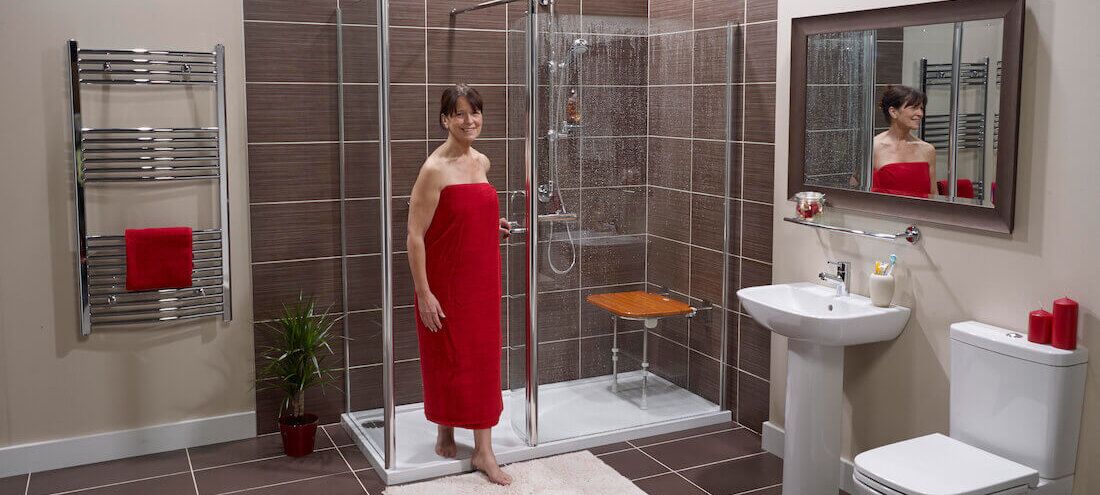
A warm bath or shower should be one of the most relaxing parts of the day. But when balance, joint pain or reduced strength make it harder to get in and out safely, something that was once routine can start to feel risky. The good news is that improving bathing mobility rarely means ripping out the whole bathroom. A few small, well-chosen changes are often enough to bring back safety, confidence and independence.
This guide covers practical tips you can put in place straight away, the signs that it might be time for professional bathroom adaptations, and how to choose the option that fits your needs.
Why bathing can become difficult
Bathing relies on movements most of us take for granted: stepping over the side of the bath, balancing on a wet floor, lowering yourself down and standing back up. Arthritis, joint pain, reduced strength and poor balance all make these steps harder, and the bathroom’s hard, wet surfaces leave little room for error.
According to NHS advice on falls, anyone can have a fall, but falls are more likely if you are older or have mobility problems. A slip in the bathroom, or even a near miss, can dent confidence badly.
There is an emotional side too. Bathing is personal, and needing help with it can feel like a loss of dignity. Some people start to avoid bathing rather than ask for support. Acting early helps you stay independent for longer, in the home you know.

Simple tips to improve bathing mobility
You do not need to change everything at once. Start with the simplest adjustments below and build up from there.
Install grab rails for stability
Grab rails give you something solid to hold while stepping in, lowering yourself down or standing back up. They take pressure off your joints and stop you grabbing at towel rails or shower screens, which are not designed to take your weight. A rail fitted beside the bath, for instance, gives a steady handhold at the moment most slips happen: getting in and out. Fitting grab rails in the bathroom is one of the steps the NHS recommends for preventing falls. Rails need to be fixed securely to the wall and positioned for your height and reach, so it is worth having them installed professionally.
Use non-slip mats or flooring
Wet, soapy surfaces are the biggest hazard in any bathroom. A non-slip mat inside the bath or shower, with an absorbent mat on the floor outside, adds grip exactly where you need it. This is another of the NHS’s recommendations for preventing falls at home. If you are updating the room anyway, slip-resistant flooring or a textured shower tray gives the same protection permanently, with no loose mats to trip over.
Improve bathroom lighting
Dim lighting makes it harder to judge wet patches, edges and steps, especially as eyesight changes with age. A brighter main light helps immediately, and a plug-in night light is an inexpensive addition for anyone who uses the bathroom during the night. Simply being able to see the edge of the bath clearly can be the difference between a steady step and a stumble.
Make water controls easy to use
Stiff taps are difficult with arthritic hands, and stretching across the bath to reach them throws you off balance. Lever taps can be worked with a closed fist or an elbow, and thermostatic controls keep the water at a set temperature, removing the risk of scalding. Where possible, position controls so you can reach them from outside the bath or shower as well as inside.
Use a bath seat or shower chair
If standing for a whole shower is tiring, a seat lets you wash comfortably without rushing. Look for sturdy designs with rubber feet, or a wall-mounted fold-down seat if floor space is tight. Someone recovering from a hip operation, for example, can often keep showering independently with a fold-down seat where they would otherwise need help. Many walk-in showers include built-in seating as part of the design.
Keep essentials within easy reach
Overstretching for a bottle on a high shelf, or bending for soap that has dropped, is an easy way to lose balance. Keep everything you use within arm’s reach of where you sit or stand, and clear clutter from shelves and the floor. A tidy bathroom is a safer bathroom, and sorting it takes minutes.
Consider a handheld shower head
A handheld shower head lets you bring the water to you, rather than twisting and turning beneath a fixed head. It is especially useful if you bathe seated, and it makes washing easier for anyone helping you. Most models fit standard fittings, so this is often a simple swap.

When to consider professional bathroom solutions
Bathing aids go a long way, but sometimes they are working around a bathroom rather than fixing the problem. It may be time to look at professional bathroom solutions if:
- you avoid bathing because it feels unsafe
- the step over the bath side is unmanageable even with rails and a seat
- you have had a fall or a near miss in the bathroom
- a carer cannot help you safely in the current space
Specialist mobility bathing solutions remove the hazard at its source rather than managing it:
- Walk-in baths have a watertight door, so you step over a low threshold instead of climbing over the side. Many include a built-in seat and controls within easy reach.
- Low-threshold walk-in showers remove the step almost entirely, with seating and grab rails built into the design.
- Wet rooms have a level floor across the whole room, which suits wheelchair users and anyone who needs a carer’s help with washing.
Because these adaptations are designed around your mobility, they tend to stay suitable as your needs change, which makes them a sounder long-term answer than adding more aids to an unsuitable room. The NHS also publishes guidance on home adaptations, including help that may be available through your local council.
Choosing the right solution
There is no single right answer, so weigh up:
- Your level of mobility, both now and realistically in a few years. If stepping over the bath is already difficult, a walk-in bath or level-access shower is worth considering before it becomes impossible.
- Your bathroom space. Compact walk-in baths suit smaller rooms, while wet rooms can make the most of awkward layouts.
- Your budget. Simple aids cost little, while a full adaptation is a bigger investment that pays back in years of safe, independent bathing.
- Futureproofing. A solution that will still work for you in five years’ time is usually better value than one you will outgrow.
A home assessment by a specialist is the easiest way to work through these questions, because the right answer depends on your bathroom as much as your mobility.

How Premier Care in Bathing can help
Premier Care in Bathing has spent more than 30 years designing and installing accessible bathing across the UK. Every project starts with a free home survey, so recommendations are based on your bathroom, your mobility and your budget rather than a one-size-fits-all package. Our own teams handle the full installation, from compact walk-in baths to complete accessible bathroom designs, and our customers rate us Excellent on Trustpilot.
Safer bathing is within reach
Losing confidence in the bathroom does not have to mean losing independence. Start with the small changes: a grab rail, a non-slip mat, better lighting. If those are no longer enough, specialist help is available and often simpler to arrange than people expect. To talk through your options, request a free brochure or speak to our team.
Frequently asked questions
What is the safest way to bathe with limited mobility?
Reduce the risks before you start: good lighting, a non-slip mat, grab rails where you get in and out, and everything you need within reach. Bathe when someone else is home if you feel unsteady, and use a seat so you are not standing longer than you need to. If getting in and out of the bath still feels unsafe, a walk-in bath or low-threshold shower removes the most dangerous step altogether.
Are walk-in baths worth it?
For anyone who struggles to climb over the side of a standard bath, a walk-in bath removes the single biggest hazard of bathing while keeping the comfort of a proper soak. Whether it is worth it for you depends on your mobility, your bathroom and how long you plan to stay in your home. A home survey will give you a clear answer for your own situation.
Will a walk-in bath fit in my existing bathroom?
In most cases, yes. Compact models are designed with smaller bathrooms in mind, and a home survey will confirm exactly what works in your space before any decision is made.