


What is a Curbless Shower? Everything You Need to Know
This article was first published on: March 4, 2026
Last updated:
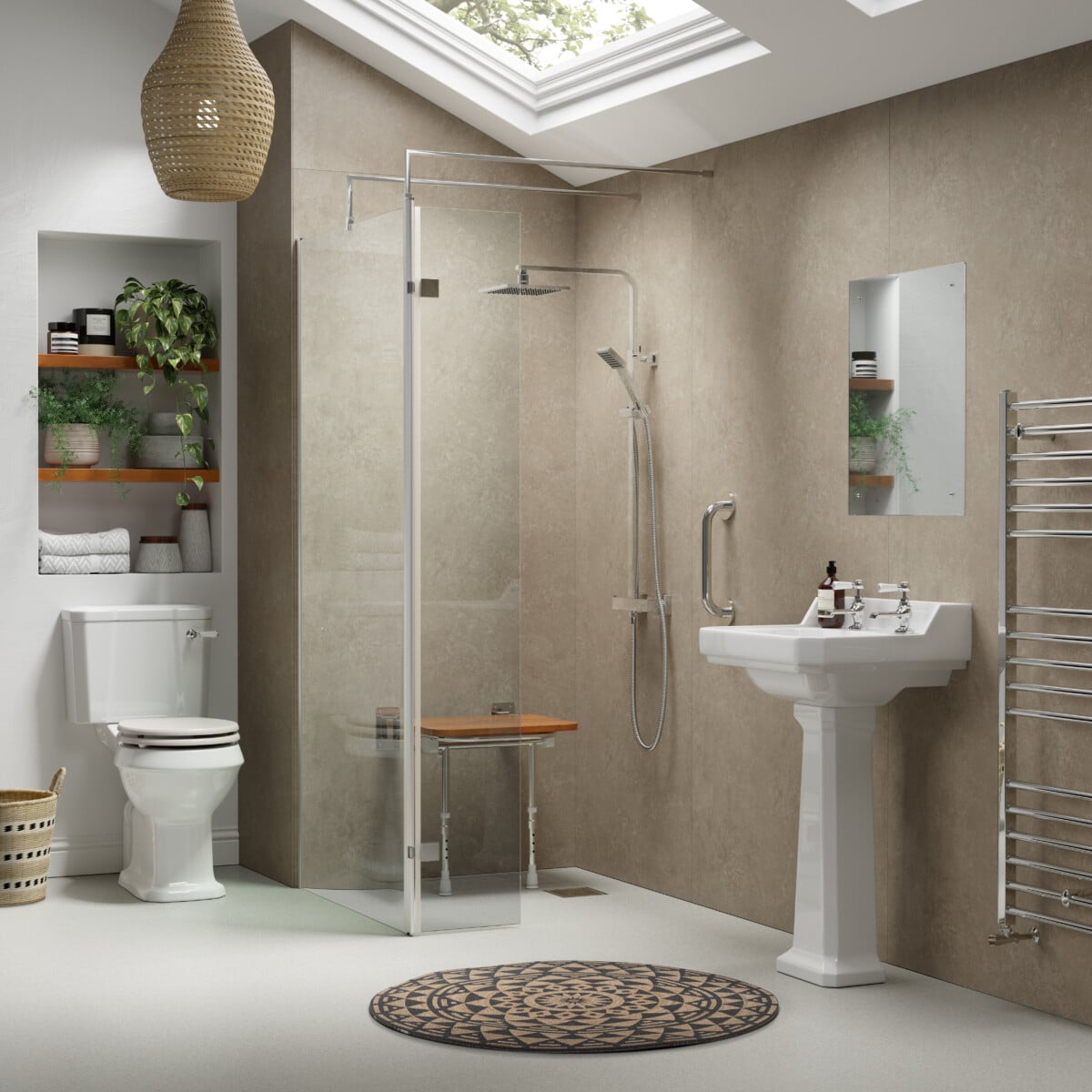
A curbless shower is a shower where the floor is level with the rest of the bathroom, so there’s no raised step to climb over. You can walk straight in, or use a mobility aid, such as a frame or wheelchair, to access the shower area.
The core design is simple. One continuous, level floor that looks sleek and feels easy to use. This makes curbless shower designs ideal for accessible bathrooms, ageing-in-place projects, and anyone who wants a modern, open look for their bathroom.
What is a Curbless Shower?
A curbless shower is a shower without the usual raised edge (or “curb”) at the entrance. Instead of stepping over a lip to get in, the bathroom floor flows smoothly into the shower area, with a gentle slope that guides water towards the drain.
Curbless showers are also called walk-in showers, zero-entry showers, or barrier-free showers. All of these names describe the same concept: a shower you can access without having to lift your feet over a threshold.
Key Benefits of Curbless Showers
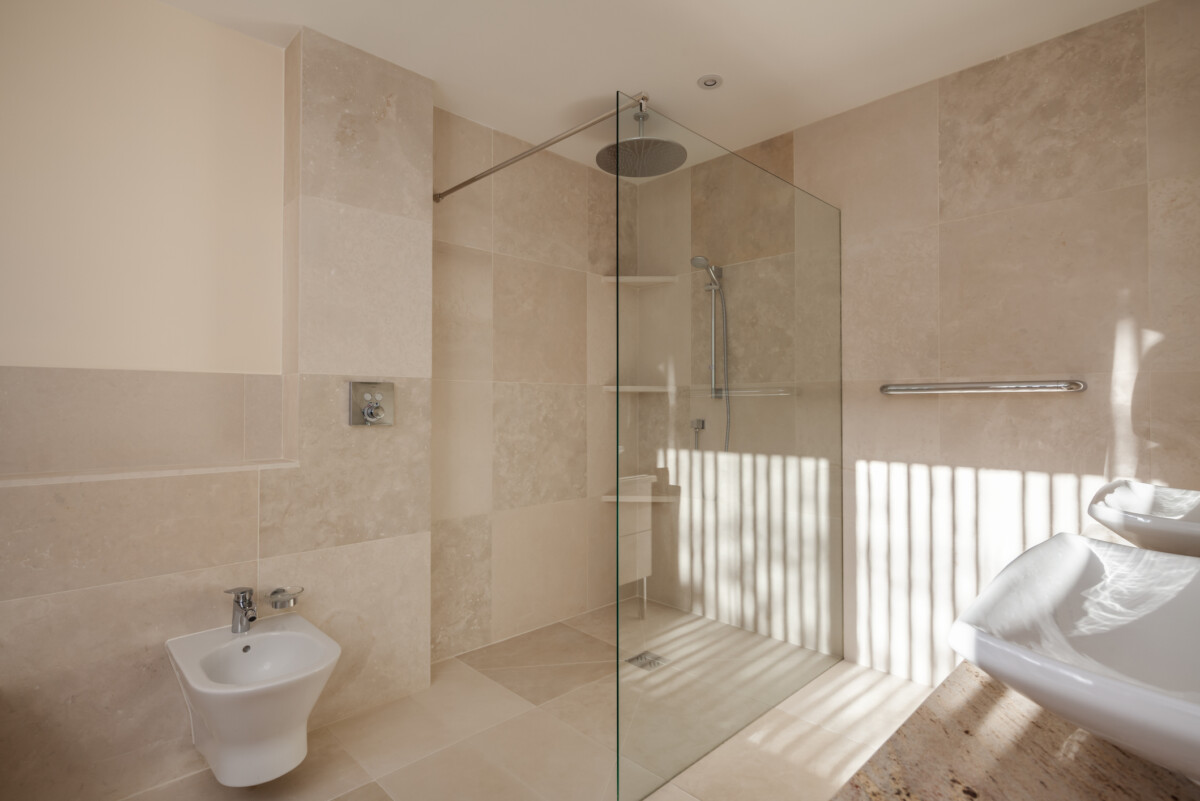
Installing a curbless shower makes life easier and safer for anyone with limited mobility, balance issues, or who uses a wheelchair or walking aid.
With no step, it reduces the risk of slips and falls while offering a modern, open design.
It’s ideal for older adults, those recovering from injury, and families who need accessible layouts.
Sleek and seamless, it makes bathrooms feel bigger and easier to clean, with no awkward edges or corners that trap grime.
Stylish but practical, a curbless shower adds long-term value to your home.
Curbless Shower Designs: Style and Function Combined
Curbless shower designs can be tailored to suit almost any style, from ultra-minimal to cosy spa retreat. The goal is to combine aesthetics with practical accessibility features.
Minimalist and Contemporary Designs
If you love a clean, modern look:
- Use the same floor tile throughout the room and shower, changing only the direction or size if you want to add subtle interest.
- Opt for neutral tones like soft greys, warm stone, or light beige.
- Keep transitions as invisible as possible with a slim frameless glass screen (or no screen at all) and low-profile drains.
Following these steps will help you to create a bathroom that feels open and simple.
Spa-Inspired Curbless Showers
Want a more luxurious feel for your accessible bathroom? Make your everyday shower session feel more like a spa visit by:
- Adding a rainfall showerhead (with a handheld shower for flexibility).
- Including built-in seating, such as a tiled bench, to encourage longer, more relaxing showers.
- Using layered lighting, such as recessed ceiling spotlights, niche lighting in shower shelves, and warm-tone LEDs for a soothing atmosphere.
- Choosing natural-looking materials such as stone-effect tiles and a soft, earthy colour scheme.
Accessible and Practical Designs
If accessibility is your top priority, you can still have a beautiful bathroom by:
- Including folding or fixed shower seats positioned to face the water comfortably.
- Installing grab rails where support is naturally needed (by the entrance, near the seat, and next to the controls).
- Choosing slip-resistant tiles or safety vinyl flooring rated for wet use.
- Keeping controls reachable from both seated and standing positions. Ideally, they should be near the entrance so you can turn the water on before stepping into the shower.
With the right finishes, your accessible bathroom can still look modern and inviting.
How to Install a Curbless Shower
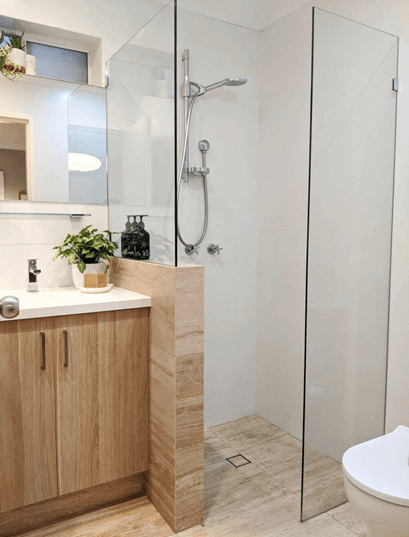
Installing a curbless shower needs careful planning, especially around drainage, waterproofing, and floor levels. Professional installation is the best option, but here is an overview of how to install curbless shower:
Step 1 - Planning the Layout
The layout needs to support good water flow and safe movement, including positioning the shower area so it’s easy to enter and exit, ensuring the floor has a gentle, consistent slope towards the shower drain, and allowing enough turning space if a wheelchair or walking aid will be used.
You will also need to decide on the size and shape of the shower, the position of screens, and where the drain should be.
Step 2 - Waterproofing and Flooring
Waterproofing is critical in a curbless shower, as more of the bathroom floor counts as a wet area. Your installer will need to use suitable waterproof membranes under the tiles or flooring in both the shower area and the surrounding zone.
They will also need to ensure the slope is created in the subfloor or shower tray former, not through uneven tiling, and choose flooring compatible with wet rooms, such as slip-resistant tiles or safety vinyl.
These steps will prevent leaks, protect the structure beneath, and ensure water flows effectively towards the drain.
Step 3 - Choosing the Right Drain System
Two common options are:
- Centre drain: Positioned roughly in the middle of the shower area. This traditional option may require more tile cuts.
- Linear drain: A long, narrow drain line, often placed along one wall or at the entrance. This allows the floor to slope in one direction for a sleeker finish.
The drain system you choose will influence tile layout, slope direction, and the overall look of your curbless shower.
Curbless Shower Ideas for Every Home
- In small bathrooms, use a clear glass partition or a single glass panel to contain spray while keeping the room feeling open. Matching tiles across the floor will help the space to feel bigger.
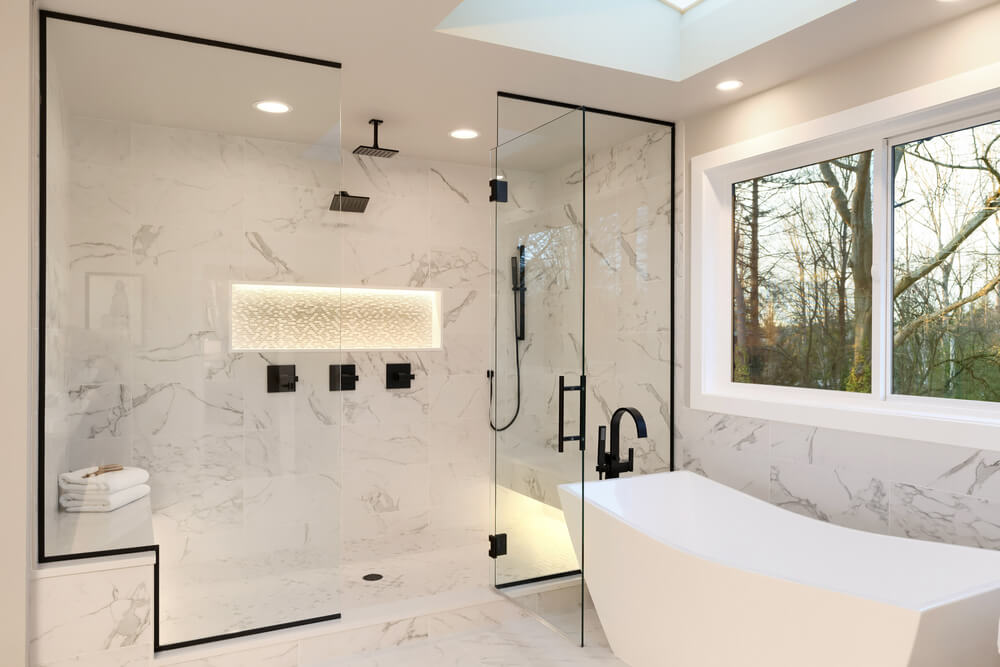
- In luxury bathrooms, combine large-format stone-effect tiles, built-in seating, rainfall and handheld showers, and subtle LED lighting in niches or under benches.
- For family bathrooms, pair a curbless shower with non-slip flooring, easy-clean glass, and simple controls.
- In accessible bathrooms, add grab rails, a shower seat, and accessible storage to keep the design calm and uncluttered.
Things to Consider Before Installing
Before committing, it’s worth thinking through a few practical points:
- Drainage and slope: The floor must be correctly sloped to the drain, and the waterproofing (or tanking) must be robust. Poor design can cause water to escape the shower area, leading to leaks.
- Professional installation vs DIY: Given the structural changes, waterproofing, and drainage requirements, it’s best to hire an experienced installer for this project.
- Building codes and regulations: Local building or plumbing regulations may specify minimum slopes, drain types, or waterproofing methods. A professional installer will be familiar with these requirements.
- Costs and long-term value. Curbless showers often cost more upfront than traditional showers due to the additional preparation required. However, they can pay off in terms of accessibility, ease of use, reduced maintenance, and potential resale appeal.
Is a Curbless Shower Right for You?
If you want a bathroom that feels open, modern, and easy to use at every stage of life, a curbless shower is a great option. It removes the barrier of a step, supports safer movement, and offers greater flexibility in how you design the space.
If accessibility, future-proofing, or a spa-inspired look are high on your wishlist, a curbless shower is definitely worth considering. Contact Premier Care in Bathing today to book a free home survey.